In industrial electrical systems, contactors play an essential role in controlling the flow of electricity to various parts of a circuit. They act as switches that can open and close electrical circuits by using an electromagnet to operate the contacts. While there are many types of contactors available, AC contactors and DC contactors are two of the most commonly used. Understanding the differences between these two types of contactors is crucial for selecting the appropriate component for a specific application.
In this article, we’ll explore what AC and DC contactors are, how they function, and the key differences between them. Whether you're designing an electrical system or looking to replace components, understanding these differences will help you make an informed decision.
At www.electrichina.com, we specialize in high-quality contactors, including both AC and DC models, designed for reliability and efficiency. By the end of this article, you’ll have a clear understanding of these two essential components and how to choose the right one for your needs.
1. What is an AC Contactor?
An AC contactor is a type of electrical switch used to control alternating current (AC) circuits. These contactors are designed to handle higher voltages and are typically used in applications where the current alternates direction, such as in household appliances, motors, and other industrial machinery.
How Does an AC Contactor Work?
When an AC current flows through a coil in the contactor, it generates a magnetic field that pulls the contacts together, completing the circuit. When the current is interrupted, the magnetic field collapses, causing the contacts to open and disconnect the circuit. This action allows for reliable control of the power flow to various components.
AC contactors are primarily used in circuits that require frequent switching, and they are capable of handling the fluctuating nature of AC voltage.
2. What is a DC Contactor?
A DC contactor operates on direct current (DC) circuits, where the current flows in a single direction. DC contactors are designed for applications that require the control of DC power sources, such as batteries, solar power systems, and electric vehicles.
How Does a DC Contactor Work?
Similar to an AC contactor, a DC contactor uses a coil and an electromagnet to move the contacts in and out of the circuit. However, unlike AC, which alternates, DC remains constant in one direction. This makes the operation of DC contactors slightly different in terms of handling the steady flow of current.
DC contactors must be carefully designed to manage arcing, which is a common issue when breaking the steady flow of current in DC circuits. The contacts in DC contactors are specifically built to minimize this effect, ensuring that they can handle the interruption of the current safely.
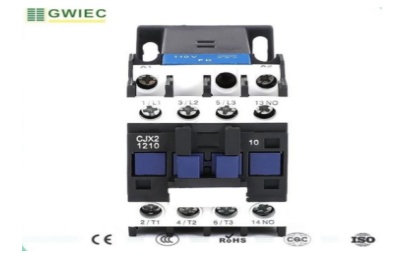
3. Key Differences Between AC and DC Contactors
Now that we’ve discussed the basic workings of both AC and DC contactors, it’s time to explore their key differences. Below is a table that highlights these differences to help you understand which type of contactor is better suited for your application:
Feature | AC Contactor | DC Contactor |
Type of Current | Alternating Current (AC) | Direct Current (DC) |
Arcing | Less severe, as AC naturally goes to zero at the end of each cycle | More severe, as DC maintains a steady flow, leading to continuous arcing when contacts open |
Applications | Industrial machinery, HVAC systems, motor control, lighting circuits | Solar power systems, electric vehicles, battery-powered equipment |
Voltage Handling | Can handle higher voltages with ease | Typically used in low to moderate voltage systems |
Size and Design | Larger and more robust designs for high power loads | More compact, with designs focused on minimizing arcing and wear |
Maintenance | Lower maintenance due to less arcing and easier contact cleaning | Higher maintenance due to continuous current flow and higher arcing |
Arcing Differences
One of the most significant differences between AC and DC contactors is how they handle arcing. AC contactors benefit from the fact that AC current naturally reaches zero volts at the end of each cycle, reducing the chances of damaging arcs forming when the contacts open. In contrast, DC circuits do not have this natural break, making arcing a greater concern. To combat this, DC contactors are often designed with more robust contacts and specialized materials to reduce the impact of arcing.
Applications
AC contactors are ideal for applications where the circuit is powered by alternating current, such as motors, industrial machines, and lighting systems. On the other hand, DC contactors are typically used in systems where the power source is DC, such as in renewable energy systems, electric vehicles, or in any application where batteries are involved.
4. Which Contactor Should You Choose for Your Application?
Choosing between an AC and a DC contactor ultimately depends on the type of electrical circuit you are working with. Both contactors are designed to perform specific functions in different environments, and selecting the correct one ensures your system operates efficiently and safely. Let’s take a deeper look at the key considerations that will guide your decision.
AC Circuits: Ideal for High-Voltage Alternating Current Applications
If your application involves alternating current (AC), such as motors, household appliances, HVAC systems, or industrial machinery, an AC contactor is the appropriate choice. AC systems typically use a power source that alternates its direction of flow, which can make the electrical circuit more susceptible to arcing when the circuit is opened or closed. However, AC contactors are specifically designed to manage this by taking advantage of the natural current zero crossing in AC systems, which minimizes arcing when the contacts open.
Why Choose AC Contactors for AC Circuits?
High Voltage Handling: AC contactors are built to handle higher voltage applications typically found in industrial and commercial environments.
Efficiency with Heavy-Duty Equipment: They are robust enough to manage the frequent switching needed for large equipment like motors, compressors, and high-power machinery.
Durability: AC contactors are designed to withstand frequent cycles of on/off switching, ensuring reliable and long-term operation.
In short, AC contactors are best suited for systems that require reliable, robust switching in environments with higher electrical loads or voltages, making them ideal for commercial, industrial, or residential applications that rely on AC power.
DC Circuits: Perfect for Low-Voltage and Battery-Powered Systems
On the other hand, if your application uses direct current (DC), such as solar energy systems, electric vehicles, battery-powered equipment, or telecommunications systems, a DC contactor is necessary. DC circuits have a constant flow of electricity in one direction, which means there is no natural break in the current flow, unlike in AC systems. This makes DC systems more prone to arcing when the circuit is opened.
Why Choose DC Contactors for DC Circuits?
Suitability for Low to Moderate Voltages: DC contactors are designed to manage the continuous flow of electricity, making them ideal for low-voltage applications like battery storage systems and renewable energy solutions.
Arcing Protection: Since DC does not naturally zero out, DC contactors are designed with components that handle arcing more effectively. They have more robust contacts that can withstand the higher risk of damage from continuous current flow.
Compact and Efficient: DC contactors tend to be smaller and more cost-effective, making them ideal for compact systems or where space and cost are critical considerations.
DC contactors are the perfect fit for low-voltage applications, particularly where power sources are consistent, such as in solar panel systems, electric vehicles, and other battery-dependent equipment.
5. Conclusion
Both AC and DC contactors are integral components for controlling electrical circuits, but they are designed to meet different needs. Understanding the specific requirements of your application—whether dealing with alternating or direct current—will help you select the right contactor for your needs.
At www.electrichina.com, we offer a wide range of AC and DC contactors designed to provide reliable, long-lasting performance. Whether you're looking for industrial-grade AC contactors or specialized DC contactors for renewable energy systems or electric vehicles, we provide the best solutions to meet your needs. Our products are designed with quality, durability, and efficiency in mind, ensuring that you get the most out of your electrical systems.
Contact us today to learn more about our selection of AC and DC contactors and how they can enhance the safety and performance of your electrical systems.
FAQ
Q1: Can I use a DC contactor for an AC circuit?
A1: No, DC contactors are specifically designed for direct current systems. Using a DC contactor in an AC circuit may result in improper operation and could damage the equipment.
Q2: How do I know if I need an AC or DC contactor?
A2: The type of contactor you need depends on whether your circuit is powered by alternating current (AC) or direct current (DC). Check your system’s power source to determine which type of contactor is appropriate.
Q3: Are DC contactors more expensive than AC contactors?
A3: Generally, DC contactors are smaller and less expensive for low-to-moderate voltage systems. AC contactors tend to be more expensive due to their robust design for handling higher voltages.
Q4: How long do contactors typically last?
A4: The lifespan of a contactor depends on the usage and maintenance. With proper care and cleaning, contactors can last anywhere from 5 to 10 years or more before needing replacement.


