When designing electrical systems for various applications, one of the critical decisions that engineers and designers must make is whether to use a DC contactor or a relay. Both devices serve similar purposes—controlling the flow of electricity within a circuit by acting as switches—but they are used in different contexts and have distinct advantages depending on the type of current and the operational demands. A DC contactor is typically preferred in high-power, direct current (DC) applications due to its ability to handle higher voltages and currents more effectively than a relay.
The decision to use a DC contactor instead of a relay is often influenced by several key factors such as the type of current (AC or DC), the power rating of the circuit, durability, and the switching speed required. In this article, we will explore why a DC contactor might be the superior choice in many situations, particularly in industrial, automotive, and renewable energy applications.
A DC contactor is a type of electrical switch designed to control DC circuits with high current capacity. Unlike regular relays, which are often used for smaller loads and low-power applications, DC contactors are built to handle larger, more demanding circuits. These contactors are specifically designed to deal with the challenges of DC circuits, where the current does not naturally drop to zero as it does in alternating current (AC) systems. This characteristic of DC makes it more difficult to interrupt the current without causing issues like arcing or damage to the switch.
This is where a DC contactor comes into play—it is designed to handle these high currents and safely disconnect DC power sources without causing excessive wear and tear. Let’s delve deeper into the reasons why you might prefer a DC contactor over a relay for certain applications.
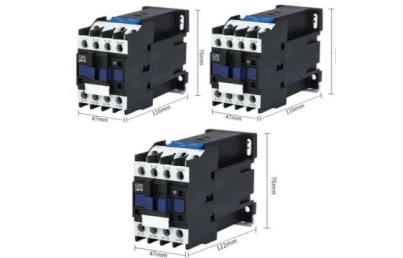
Key Differences Between DC Contactors and Relays
1. Current Handling Capacity
One of the primary reasons why DC contactors are preferred over relays in high-power applications is their current handling capacity. A DC contactor is specifically engineered to manage high current flows, often in the range of tens to hundreds of amps, without risk of failure. This capability is crucial for demanding applications such as electric vehicles (EVs), renewable energy systems (like solar power systems and wind turbines), and large industrial machinery where reliable, high-power current control is essential.
In these high-power applications, the current requirements can exceed what relays are designed to handle. DC contactors are robust, heavy-duty switches built to withstand constant or repeated high-current flows without degradation. Their internal components, including contacts and insulation, are designed to handle large currents over extended periods, ensuring long-term reliability.
In contrast, relays are typically intended for lower current applications, usually in the range of 10 to 30 amps. While relays are well-suited for smaller appliances, low-power circuits, or signal switching, they simply lack the capacity to handle the high currents needed in systems such as EVs or large industrial installations. When relays are used in high-power applications, they can suffer from issues such as overheating, premature wear, and eventual failure. Therefore, DC contactors are the preferred choice for systems where reliable current management is essential for safe and efficient operation.
2. DC Circuit Breaking
The key difference between DC contactors and relays lies in their ability to interrupt DC circuits. In alternating current (AC) systems, the current naturally drops to zero as the voltage alternates, which makes it easier to interrupt the circuit without significant arcing. However, in DC circuits, the current does not naturally reach zero, which means that it is much harder to stop the current flow without creating harmful arcs.
DC contactors are specifically designed to handle the challenge of interrupting DC circuits by using special arc suppression technologies such as arc chutes or magnetic blowouts. These mechanisms are designed to quickly dissipate the energy of the arc when the contactor opens, preventing damage to the contactor’s internal components. This makes DC contactors much more reliable for breaking high-current DC circuits, whereas relays may experience significant wear and damage due to the high-energy arcs that form when interrupting DC circuits.
Feature | DC Contactor | Relay |
Current Capacity | High, up to hundreds of amps | Low, typically 10-30 amps |
Circuit Type | Designed for DC circuits | Suitable for AC and low-power DC |
Arc Suppression | Built-in arc suppression | Limited arc suppression |
Durability | High, designed for frequent switching | Moderate, limited by arc wear |
Size | Larger and more robust | Smaller, compact |
3. Durability and Longevity
Given their robust design and the ability to handle large currents and frequent switching, DC contactors are generally more durable than relays. In industrial applications or systems that require frequent switching, a DC contactor will last much longer due to its superior ability to handle the stress of high-current operations. Over time, relays are subject to contact wear from arcing, which can lead to performance degradation and eventually failure, especially in DC circuits.
DC contactors, on the other hand, are built to handle frequent operations with minimal wear. This makes them an excellent choice for systems where reliability and longevity are critical, such as in solar power systems, electric vehicles (EVs), and industrial machinery. The superior arc suppression technology in DC contactors significantly reduces the risk of contact deterioration, extending their life.
4. Switching Speed and Control
While DC contactors are designed for high-power applications, they are typically slower in terms of switching speed compared to relays. This can be an advantage in certain industrial applications, where slower switching might be needed to ensure proper operation and avoid electrical surges. However, relays can switch faster and are often used in applications where quick on/off switching is required, such as in low-power circuits or signaling.
For most high-power applications involving DC circuits, DC contactors are still the better choice due to their ability to handle high currents and provide reliable switching over extended periods. They are specifically designed to offer control without damaging the circuit or components.
5. Cost Considerations
While DC contactors are generally more expensive than relays due to their specialized design and higher current capacity, their durability and ability to handle high-power DC circuits without the risk of failure make them a worthwhile investment in the long run. In contrast, relays are more affordable and are ideal for lower current applications, but they may need to be replaced more frequently in high-power circuits due to wear from arcing.
Applications of DC Contactors
DC contactors are commonly used in a variety of applications where high-current DC circuits need to be controlled and safely interrupted. These applications include:
Electric Vehicles (EVs): DC contactors are used in the high-voltage battery systems of EVs to control and disconnect the power supply during charging and operation.
Solar Power Systems: In solar systems, DC contactors are used to control the flow of electricity from solar panels to the inverter or grid, as well as for disconnecting power for maintenance.
Industrial Equipment: Many industrial systems require DC contactors to control motors, high-power DC circuits, and other equipment that operates on direct current.
UPS Systems: Uninterruptible power supplies (UPS) rely on DC contactors to manage battery charging and discharging cycles.
Conclusion
While relays are a suitable choice for low-power and signaling applications, DC contactors are essential when dealing with high-power DC circuits. Their ability to handle large currents, provide reliable switching, and resist the challenges of interrupting DC circuits makes them indispensable in many industries. Whether you’re working with electric vehicles, solar power systems, or industrial machinery, DC contactors offer the durability and reliability required for safe and efficient operations.
At www.electrichina.com, we specialize in providing high-quality DC contactors designed to meet the demands of modern high-power DC applications. Our products are built with advanced technology and high-quality materials to ensure that they provide exceptional performance and longevity in all of your critical systems.
FAQ
1. What is the main difference between a DC contactor and a relay?
The primary difference is that DC contactors are designed for high-current DC circuits and feature arc suppression technology, making them more suitable for interrupting DC power. Relays, on the other hand, are generally used for low-power applications.
2. Why are DC contactors more reliable than relays for DC circuits?
DC contactors are specifically built to handle the challenges of DC circuits, such as preventing arc formation, which can cause damage to the contacts in relays. They are more durable and capable of handling high currents without degradation.
3. Can a relay be used instead of a DC contactor?
In low-power applications or for simple on/off control, relays can be used in place of DC contactors. However, for high-power DC circuits, a DC contactor is the safer and more reliable option.
4. How do I choose the right DC contactor for my system?
When choosing a DC contactor, consider factors like the maximum current and voltage of your circuit, the depth of the circuit’s power requirements, and any special features such as arc suppression or the need for multiple contacts.


